Skip to content

Foster Parents Lend a Hand (Wing)
The biological parents of Pike are Walker and Anchovy; however, they had difficulty incubating their egg. For the safety of the egg, zookeepers intervened and removed the egg from their nest, placing it under Houdini and Anke instead. Houdini and Anke have raised several chicks throughout the years.
Marlin’s biological parents, Mackerel and Thistle, laid two eggs this year, as penguins often do. It’s easier for penguins to incubate only one egg though, and when two eggs are laid, the animal care team removes one and places it under another available nesting pair of penguins who don’t have eggs of their own. So, Marlin’s egg was given to Piper and Wallace to incubate. Mackerel and Thistle’s other egg unfortunately was not viable, which isn’t uncommon.
An Intervention for Marlin
After about two weeks of age, the animal care team noticed during a routine veterinary check that Marlin had some respiratory issues. He also wasn’t gaining weight as he should have. The zookeepers attempted to treat Marlin while he was in the nest with his foster parents but ultimately decided to remove him so they could more easily and frequently provide medical care and added nutrition.
Marlin was medicated twice a day and nebulized with a misted antibiotic. He was also fed through a tube with a specialized penguin chick formula that contained water, krill, herring and vitamins, all blended into a smooth “penguin milkshake.” As Marlin’s grew, small pieces of fillet fish were added to his diet. Over a few weeks, the formula amounts were decreased, and he switched over to a diet of small pieces of filleted fish.
Looking Out for the Chicks
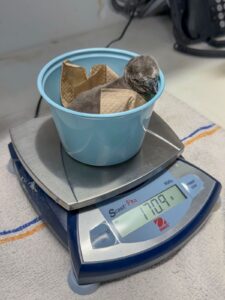
The penguins’ nests are located in the burrow area behind the scenes in the Penguins of the Pacific habitat. When a chick hatches, the zookeepers briefly remove the chick — for less than five minutes — for a veterinary exam and weighing. This is done several more times over the next week or so, to confirm that the chick appears to be healthy, is gaining weight and being fed adequately by their parents (or foster parents). After the first week, the care team shifts to a weekly exam and weight check.
At five weeks old, the chick is ready to eat small, whole fish. This age usually coincides with the chick beginning to be left alone by the parents and wandering out of the nest box. It’s a dangerous time for a chick, as they aren’t yet ready to swim and can’t defend themselves from the other adult penguins, who aren’t always kind to the chicks. If the chick were to wander out of the burrow area and fall into the water in the habitat, it would likely be fatal unless a zookeeper happened to be there at the time and witnessed it. To prevent any of this happening, and to help wean the chick, they’re preemptively removed from the habitat.
This is when a chick learns to take food from people (the animal care team) and that humans are friends, not scary predators. Chicks are hand-fed, beginning with very small fish (smelt) and herring fillets (with the skin and bones removed). As time goes on, chicks are gradually offered larger pieces until they’re eating the same fish that adult penguins eat (whole capelin and herring). Chicks are weighed daily, and the amount of food they’re consuming is closely monitored. They also begin training to step up onto a scale for daily weighs-ins.
Learning the Ropes
During this dedicated time, the chicks begin to molt out of their fuzzy down feathers into adult, waterproof feathers, and zookeepers introduce them to water. They start with a kiddie pool with just a few inches of water and let the chicks stand in it. They’re unsure about the whole situation at first, but the care team does this this daily, gradually increasing the amount of water. By the end of the first week, the kiddie pool is full, and the chicks look forward to pool time every day.
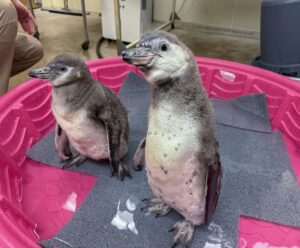
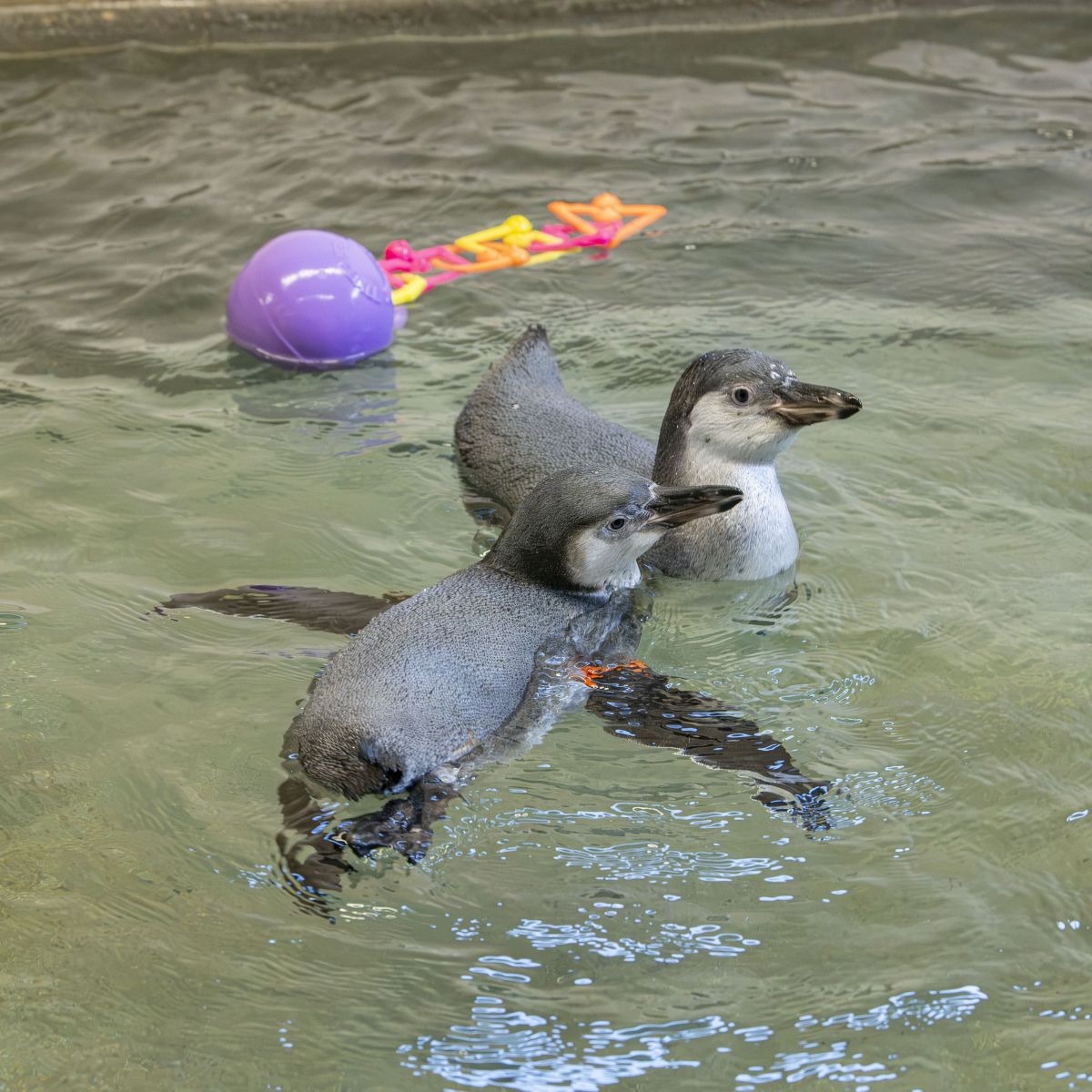
When they started floating on their bellies and dunking their entire bodies into the kiddie pool, they move on to the next step — one of the smaller pools located in the Flamingo indoor habitat (not used by the flamingos).
Once they’ve mastered that, chicks move to a deeper pool there that was originally designed for large waterfowl. It’s perfect for young penguins to really practice those swimming and diving skills. Being proficient swimmers helps with their introduction into Penguins of the Pacific, as they learn to navigate their new habitat and all the other birds.
Moving Back In
In late July, Pike and Marlin were introduced onto the habitat. The first step included time on the habitat while contained by a small pen, which allowed the chicks to see the adults and the adults to see the chicks without any actual contact occurring. It also gave the chicks a chance to check out the habitat without the stress of anyone bothering them. The zookeepers that Marlin and Pike were familiar with were there the entire time, watching over to make sure they were okay. The second step was releasing them onto the habitat with a zookeeper present to monitor the flock and the interactions between the chicks and the adults, as well as the chick’s habitat usage.
They both took to the habitat right away and did great! After about four hours of supervision, the care team felt comfortable leaving the chicks out without constant monitoring. They did check on them the rest of the day, and second and third-shift zookeepers checked in on them once an hour throughout the night.
The Chicks and the Flock
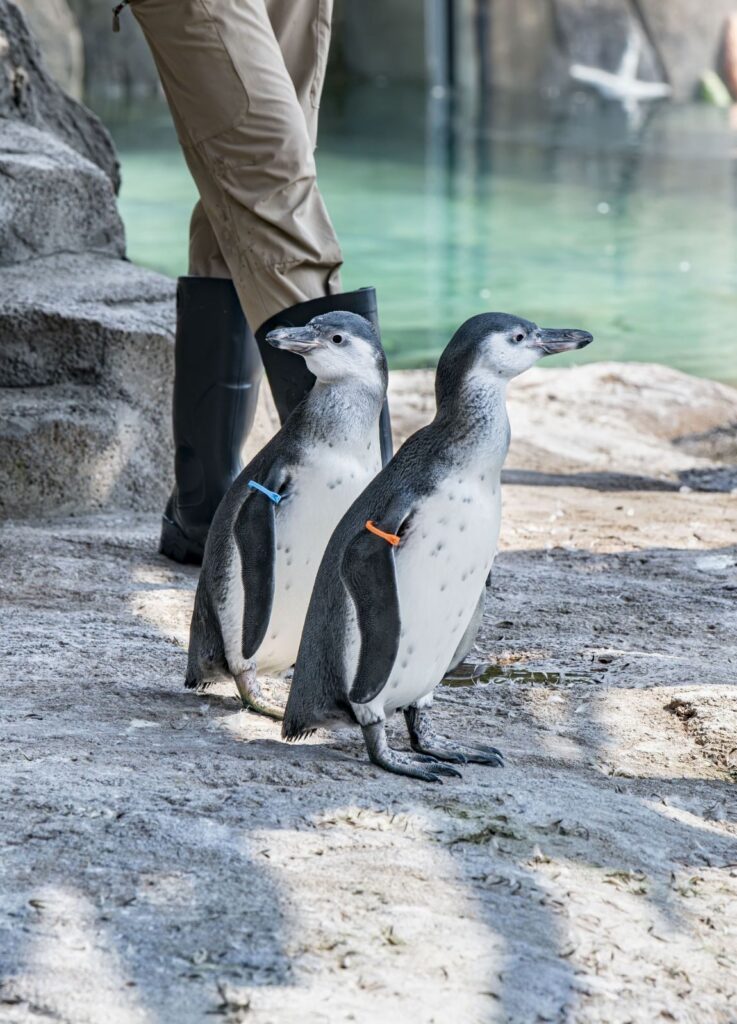
Aside from the different-colored bands on their right wings, the chicks can be distinguished from the adults based on coloration. They’re light grey below and dark grey above. Pike and Marlin won’t get their black and white coloration or stripes until their first molt at around one year old. The chicks are already nearly adult size and will continue to gain weight and muscle as they mature.
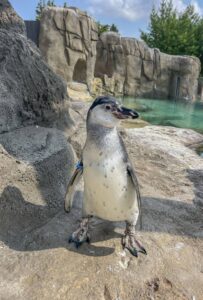
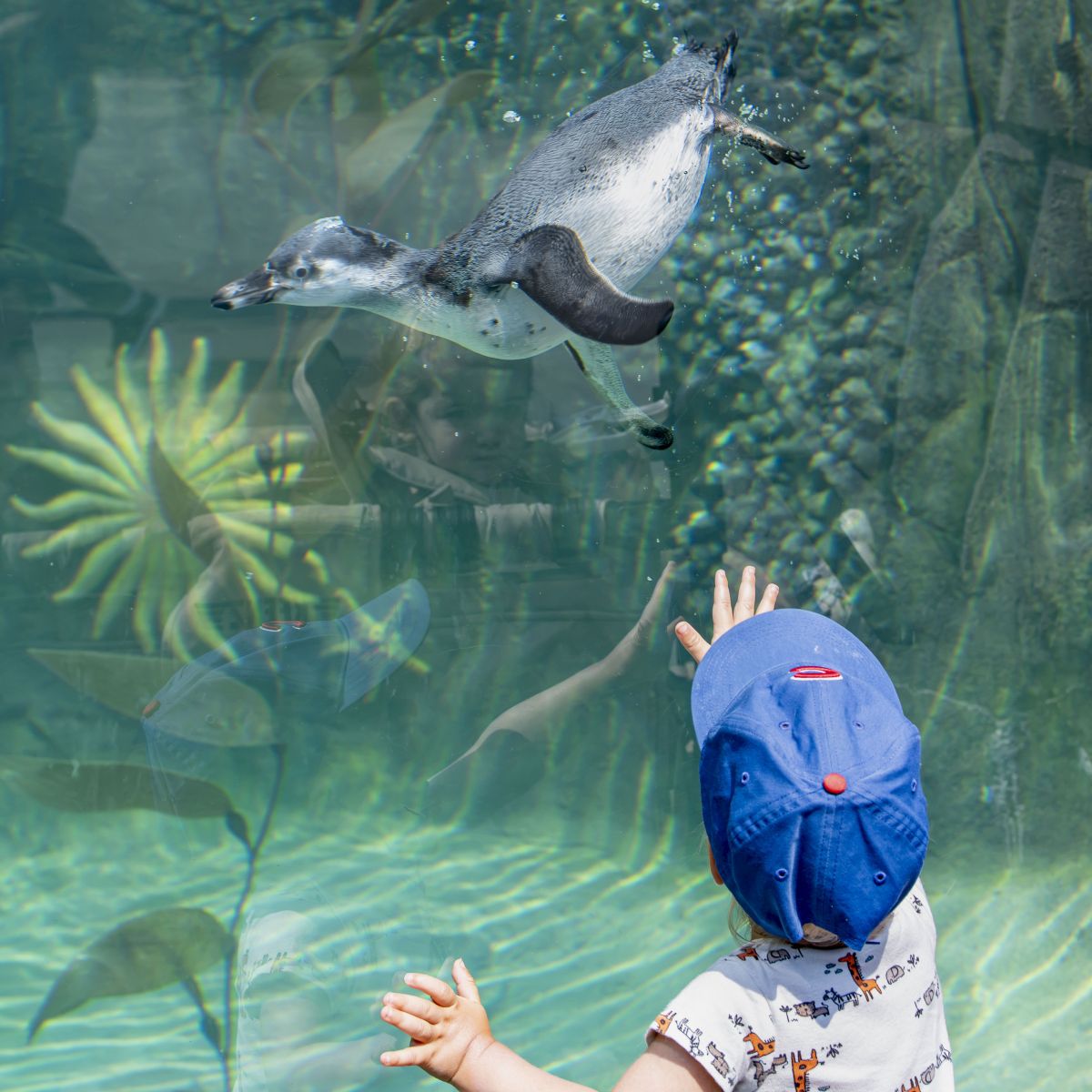
Zookeepers share that Pike is outgoing, curious — and very interested in them. Marlin is a bit more independent and prefers to do his own thing. Both chicks are big fans of swimming, enjoying the large pool in their habitat.
There are now 16 members of the Zoo’s Humboldt penguin flock, and guests can view them all, year-round, at the Penguins of the Pacific habitat!