Happy National Zookeeper Week

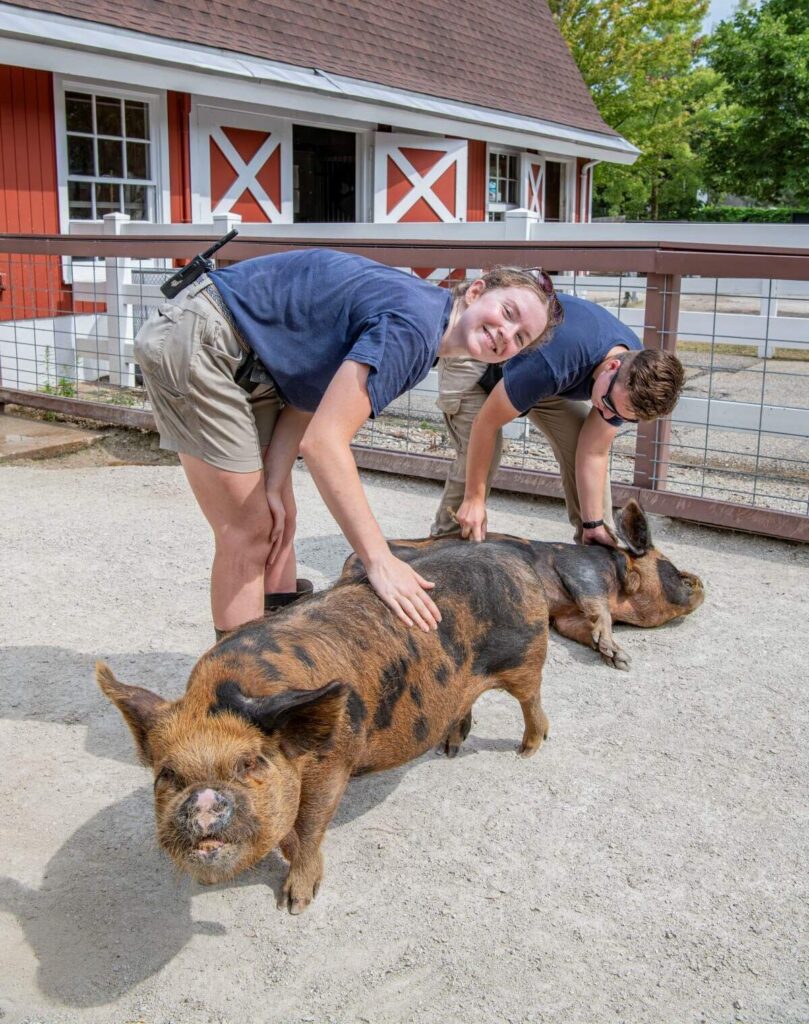
Zookeepers with kunekune pigs

Posted Date

July 22, 2026

Category

Education, In The News

We appreciate our zookeepers every day, but this week (July 19-25) is a special time to celebrate these dedicated professionals who provide exceptional care while promoting conservation and empathy for animals.

Learn more about some of our team members and what goes into the important work that they do on a daily basis — rain or snow, heat or cold, no matter the circumstances.

Thank you, zookeepers!

1. How did you become a zookeeper? What led you to MCZ? Where else have you worked?
  • “I always had in interest in wildlife. When I was in high school, I participated in a volunteer program at my local zoo, Miller Park Zoo in Bloomington, Illinois. I went to college to study conservation biology and interned at Miller Park and really fell in love with the work and the ability to connect with guests about the animals. Milwaukee was still close enough to be near my family, so when a seasonal Family Farm position opened here in 2022, I went for it! After almost a year, I was hired on full time.” – Wren, Family Farm

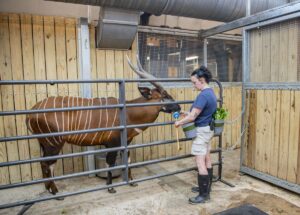
    Zookeeper Stef training with an Eastern bongo
    Stef target training with Eastern bongo Groot


  • “Being a zookeeper was a childhood dream that I never gave up on. Originally from Ohio, I attended The Ohio State University with a bachelor’s in wildlife management. I spent the first six years of my career as an intern and seasonal zookeeper at The Columbus Zoo & Aquarium. I took my first full-time job shortly after college here in Wisconsin at Timbavati Wildlife Park. I worked with a wide variety of species, but it was there that I discovered my true love of large hoofstock. After a few years there, I decided I wanted to return to a larger zoo with a wider variety of animals — which brought me here to MCZ. I briefly worked in the Family Farm and Winter Quarters before my current position opened — which is where my heart truly belonged.” – Stef, Giraffe/Rhino/Hippo


  • “I became a zookeeper through a lifelong love of animals that translated into a zoology and psychology degree from the University of Wisconsin–Madison. MCZ has always been my hometown zoo and was always my end goal! I started with an internship in Mississippi at the Jackson Zoo during college, which led me to a rehab/rescue center for native animals in Canada (bears, moose, etc). I worked for two years in Madison while interning with the Elephants, North America, and Big Cats areas here at MCZ. From there, I became a park ranger out in Boulder, taking care of wildlife interactions as well as law enforcement. On my days off there, I worked at Cheyenne Mountain Zoo in their reptile department. After all of that, I finally got a job back here in 2023 with the Elephant team.” – Ashley, Elephants

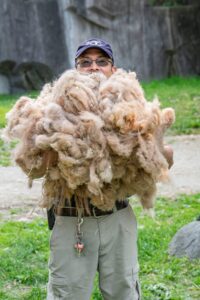
    Zookeeper Jonathan holding a giant armful of camel hair
    Jonathan holding the “results” from Bactrian camel brushing


  • “I have a bachelor’s degree in animal science. My high school and college friend started working as a zookeeper for the Wildlife Conservation Society (WCS) at Prospect Park Zoo in Brooklyn and mentioned there was a job opening and I should apply. I was working at a veterinary hospital at the time. I applied for the position and then worked at Prospect Park for four years, later transferring to the Bronx Zoo and working there for 14 years. When I resigned from WCS, I worked at Petco for several years but wanted to get back into the zookeeping field. Dr. Christy, now MCZ’s Senior Staff Veterinarian, is my wife, and we met at WCS while she was completing her three-year zoological medicine residency. Dr. Christy is from Wisconsin, so we decided to move back to Wisconsin to be closer to her family, which is what ultimately led me to MCZ.” – Jonathan, Winter Quarters


2. What’s the best part of your job?
  • “The best part of my job I would categorize into two pieces. One is animal care: I love the relationships that I’ve built with our elephants and working with them during their health checks. Having that bond and level of trust is truly something that’s hard to explain. Secondly, I really love interaction with the public. Growing up locally, I never met many zookeepers in the Zoo here; now that we have Animals in Action programming, more visible zookeeper areas, and time to chat with the public, it kind of brings me back to my joy here as a kid. It’s an amazing thing to see a child’s eyes light up when they see and talk about an animal they love.” – Ashley, Elephants

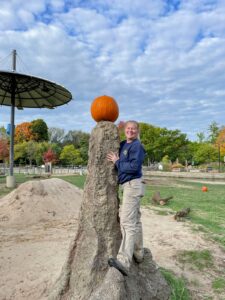
    Zookeeper Ashley standing on a tree trunk and holding a pumpkin
    Ashley places pumpkin enrichment in the Elephant habitat


  • “The relationships I form with the animals will always be the most rewarding part of the job. Some of my closest friends are a giraffe, rhino, and bongo. Not many people get to say that!” – Stef, Giraffe/Rhino/Hippo


  • “I think the best part is seeing the enjoyment the animals have from our care and attention. Whether that be clawing at a frozen watermelon, or the moment training a behavior clicks in their mind and they understand what you’re asking them to do. Animals don’t speak our languages. They can’t tell us what they need or want, so zookeepers have to figure out how to communicate and interact with them in a way that makes sense to the animal. It’s challenging in the best way and so rewarding.” – Hannah, Big Cats


3. What’s one thing you wish people knew about zookeeping?
  • “You have to be very detail-oriented to be an Aviary zookeeper because the behaviors between each bird species are so nuanced.” – Bryan, Aviary


  • “The short time that guests stop and view any animal here is a fraction of time compared to what we’re doing for the full day of observation of these animals. And the physical side is barely seen at all. There’s a morning of cleaning, and in some places, an afternoon cleaning as well. There are a couple hours of food prep. We also do animal training, enrichment preparation, recordkeeping, and public education.” – Mark, Apes & Primates

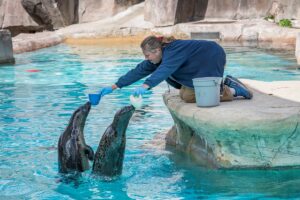
    Zookeeper target training with two harbor seals
    Collette trains with the harbor seals


  • “We give up a lot of our time. We miss our kids’ games, holidays, and such to take care of the animals. It’s not just a ‘9-5’ job for us.” – Collette, North America


  • “Zookeeping is a very physical and emotionally demanding job. It’s much more than just cleaning. Zookeepers invest their time, knowledge, and minds in the animals they take care of. They give every part of themselves to the job so that the animals live a great life and so that the guests have a memorable experience seeing animals who face very real-world threats in the wild. We hope to inspire others to care as much as we do.” – Hannah, Big Cats

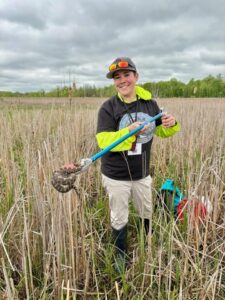
    Zookeeper doing fieldwork and holding a snake
    Amy participating in fieldwork for the Eastern massasauga rattlesnake


  • “Zookeeping as a field is very competitive and requires a four-year degree and animal experience before being considered as a potential candidate. Zookeepers also build strong relationships, even with dangerous animals.”– Amy, Aquatic & Reptile Center


4. What or who is your favorite animal to work with?
  • “I really love working with our pigs. I’m their primary trainer (the trainer that establishes behaviors and then trains other zookeepers), so I work with them quite closely. They’re very smart animals and have unique and individual personalities. They enjoy interacting with their zookeepers and getting belly scratches.” – Wren, Family Farm


  • “That’s a hard question. I have so many favorites for different reasons. The harbor seals are super great. And then the bears are just amazing. I used to be on other animal teams, and I love giraffes and elephants too; they’re so smart with training.” – Collette, North America

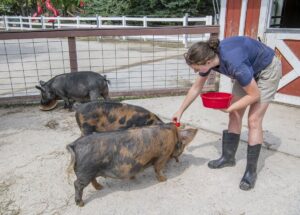
    Zookeeper feeding the pigs in the Family Farm
    Wren feeding the pigs


  • “I like the animals who like me. It takes time to build rapport with them. I enjoy when the animals can look past crowds to find you.” – Jonathan, Winter Quarters


  • “Because of how long I’ve worked here, many are my favorites, but spider monkeys are great. As with many species, individual behaviors of them are diverse. Every one of them has likes and dislikes. The four spider monkeys we have all think and move at different speeds. That variety is what makes these animals one of my favorites.” – Mark, Apes & Primates

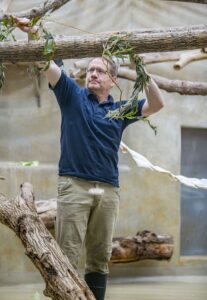
    Zookeeper placing edible leaves in the monkey habitat
    Mark places browse in the Colobus habitat


5. Describe a memorable moment or favorite story in your career.
  • “When I was an intern (at a different zoo), I helped in the transport of a tiger that was under anesthesia for a medical procedure. This isn’t an animal that you get to see that close very often, so it was incredible to see the scale of him, especially his paws. Now at the Milwaukee County Zoo, we’re able to give our high school interns a similar experience.” – Wren, Family Farm


  • “Training Penny, our Fly River turtle, to allow us to touch/rub the top of her head. When the lighting was changed in her habitat, she started growing some harmless long green ‘hair algae’ on the top of her head. Over several weeks, I trained her to come over and touch the top of her head to my pointer finger so I could gently rub the algae off her head each day, until it stopped growing back. She still does this behavior even though she hasn’t had algae on her head in over five years.” – Amy, Aquatic & Reptile Center


  • “One of my favorites is when you start to build a relationship with an animal that you are going to be training with and how they ignore you at first — and then one day, it just clicks for them and now they seek you out and want to be the only one you train or spend time with. I once wrote a foot work training plan for a giraffe. I planned my steps in order, and then when I went to train with her, the giraffe surprised me and jumped all the steps right to the behavior I was trying to train on the very first session! What a great surprise for me. Animals are so amazing.” – Collette, North America

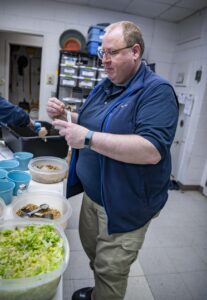
    Zookeeper in a kitchen prepping food
    Bryan preps meals for the birds


  • “Traveling to Guam to work with their populations of Guam kingfishers and Marianas crows in human care. During that same trip, I participated in the reintroduction of Guam rails to the island of Rota. Some of the birds we released were offspring from the Milwaukee County Zoo.” – Bryan, Aviary